


La Onda (The Vibe):
A family-oriented and humble neighborhood. If you’d like to settle into to a calm part of town, this is a great place to live. Parrillas frequently find their stations along the streets and small cafes are filled with the working-class men having their beers. At night, it’s all quiet on the Barracas front. However, there are some grittier elements that border the neighborhood as it is surrounded by less than safe areas (La Boca and Constitución)
History:
Barracas is located in the south of downtown Buenos Aires, along the Riachuelo River. Founded in the 18th century, the name Barracas originates from the word “barraca,” which means temporary construction of buildings and homes built from simple materials. Throughout most of the 19th century, the upper class populated Barracas until the yellow fever epidemic swept over the area. To escape the damp river conditions that incubated the illness, wealthy families moved to the northern neighborhoods of the city, leaving southern areas such as Barracas and San Telmo populated by the working middle-class.
In the 20th century, Italians and other immigrants populated Barracas and worked in the neighborhood’s many factories. These days, most of the factories have closed and made way for new construction and open spaces.

Attractions & Highlights:
While most tourists never set foot in Barracas, it does have a few interesting sights to check out. Calle Lanin is a narrow cobblestone lane that became an open air museum after the artist Marino Santa María began decorating his and his neighbors houses with colorful tile mosaics. Now, over 35 houses bare the colorful tiled facades, making Calle Lanin one of Barracas most picturesque sights.
Because this is Buenos Aires, no neighborhood would be complete without an opulent catholic church. Not only is Barracas no exception, but this modest neighborhood is home to one the most impressive in the city. Iglesia Santa Felicitas is a towering gothic church that was built by the family of Felicitas Guerrero in her memory after she was murdered by a scorned lover in 1872. It’s a wild story that inspired a lot of urban legends that still persist today. To hear the salacious tale in full, join one of the guided tours offered the last weekend of every month.
Situated right at the boarder of Barracas, San Telmo and La Boca, Parque Lezama is one of the prettiest green spaces in the area. Palm trees, ornate white washed gazeboes, meandering brick walkways, and numerous statues make for a charming place to wander around or relax.
Fun Facts:
- The intersection of streets Montes de Oca and Osvaldo Cruz is famous for inspiring the famous tango song “Tres Esquinas” (Three Corners) by Angel D Agostino and Angel Vargas.
- Barracas is one of the settings in writer Ernesto Sábatos’s novel, Sobre heroes y tumbas (About heroes and tombs).
Restaurants and Bars
Part of Barracas’ charm is the local restaurant scene. You won’t find too many contemporary or innovative restaurants in this part of town, but there’s no shortage of local bars and parrillas serving up local flavor at local prices. Parrilla de la Familia is a typical neighborhood joint tucked in the heart of Barracas. Think, gruff porteño asadores (grill masters), a lot of meat, and no tourists in sight.
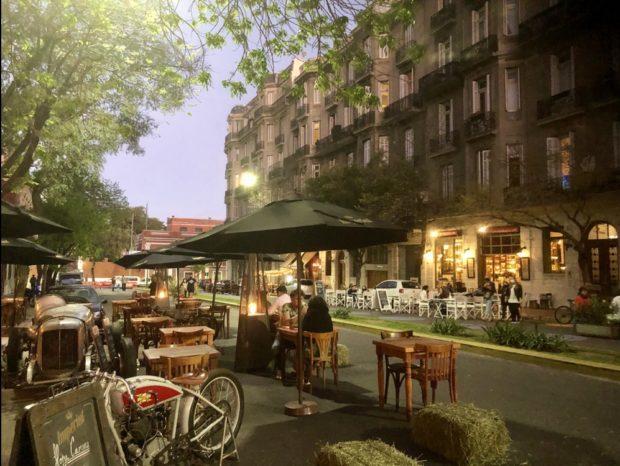
Or, for a nicer spot, head to Avenida Caseros. Situated right on the border of San Telmo and Barracas, this lively street is filled with higher-end restaurants, bars and cafes. Thanks to the European style architecture, patio seating and twinkly lights, this picturesque street makes for a great summer-time happy hour or dinner. One of the stand-outs is Caseros. This quaint bistro’s eclectic menu features Argentine favorites alongside ceviche, roast suckling pig and rice pudding, all served in huge portions on vintage china. Another of my favorites is right next door. Hierba Buena is a cheerfully decorated restaurant and bakery for the health conscious. Whether you’re vegan, celiac, lactose intolerant or watching your weight, not only can they accommodate you, but it’ll be delicious.


