





Updated January 7, 2018
Counterfeit money was a relatively common scam in Argentina in years past, but as newer, larger denomination bills arrive made with better tech the amount of fakes reported are decreasing. Stay vigilant though! The most common places to receive fake bills are taxis and night clubs or bars. It is unlikely that an ATM, hotel, restaurant or store front of any kind will pass on counterfeit bills.
The most common place to be handed a fake bill as a traveler is in a taxi. This is largely because riders are often in a rush, have difficulties communicating, or because at nighttime it’s difficult to inspect currency effectively. Try to avoid this situation entirely by using a bill that is close to the total fare. Taxi drivers do not like to break big bills, so they will be happy to see payment that requires minimum change.
Tip: When withdrawing money from an ATM, request amounts that end in 80 or 90 in order to get smaller bills (example: $2,290 or $3,980)
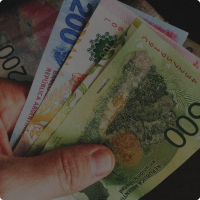
The bill “switcheroo” technique has been a common scam. The passenger will hand the driver a $500 or a $1,000 to pay the cab fare. The driver quickly switches the bill with a counterfeit and hands it back to the passenger claiming it is fake. In some cases they will switch it with a smaller bill and suggest that you made an error EX: You give a 500 note, they show you a 5 and suggest you are mistaken. That you attempted to pay with a 5 instead of a 500.
Bars and night clubs have low lighting and are full of buzzed clientele. The unsuspecting drinker can easily be passed fake bills as change if they are not paying attention.
Tip: To avoid this scam bend a corner or mark the bill you have before paying. Alternatively pay close attention, lean forward, say the amount you are handing over and watch the transaction. Either preventive technique should help you steer clear.
Feel free to read up on the more common taxi scams in Buenos Aires and the general tourist scams that happen in the more touristy parts of Buenos Aires to help you prevent them from happening.
Please keep in mind that everyone in Buenos Aires is not out to get you. It only takes a few bad apples to spoil the reputations of cab drivers and nightclubs/bars. Simply paying attention and using good judgment will keep you out of harm’s way in Buenos Aires. Thieves will prey upon those that appear distracted or disoriented.
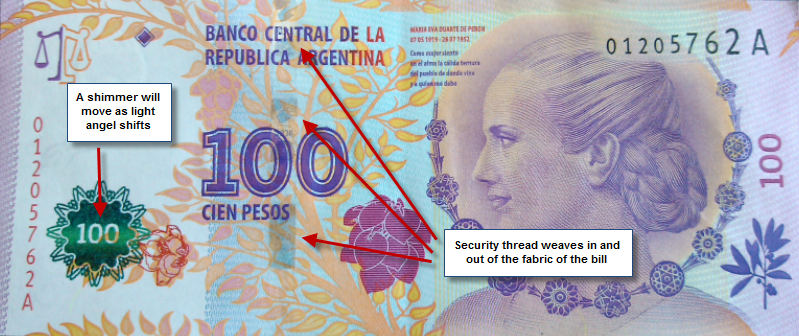
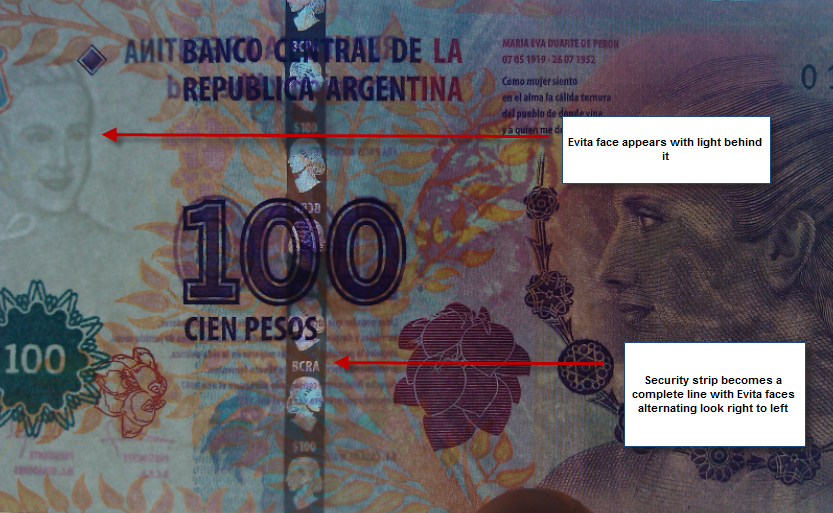
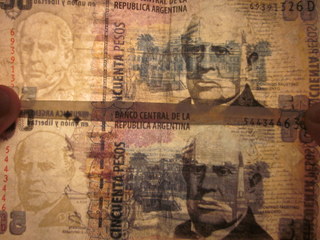
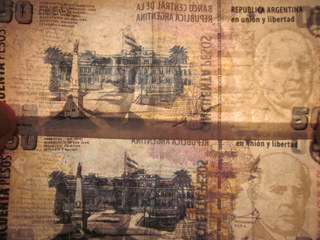
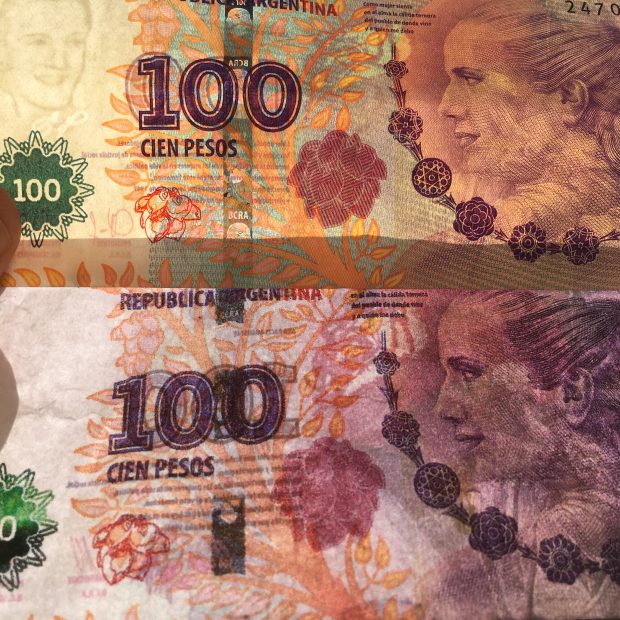
The number 1 easiest way to identify a fake bill in Argentina is to hold it up to the light and check the security thread. A $50, $100, $200, $500 or $1,000 peso bill will have the shiny security thread that weaves in and out of the bill material. A fake will have this thread glued on to or simply drawn on the outside. Just below you will see a great example (the top bill, real) of both:
1. The watermark (Evita’s face) becoming visible with light and…
2. The security thread forming a complete line weaving in and out of the fabric
The second (the bottom, fake bill) doesn’t even have a watermark in this case and the security thread is obviously glued on forming a broken security thread line.
Look for the obvious:
-Poor printing and faded colors
-A cheap feeling print paper
-Water mark of face or animal is seen easily without light behind the bill
Real deal bills will have:
-Slightly raised ink or texture on some of the actual numbers in the corners and where it states the amount ie: “Diez Pesos” “100”
-Clean crisp printing and colors
-The green printed numbers will have a glittery shine on most bills
-Water mark of the face or animal that is not easily seen without light behind it
Check out the below examples of real and fake Argentine currency. Check the security thread to spot a fake! Click the pics to make them larger and see the commentary.